
How to Choose a Fence Contractor in Canada: Questions to Ask Before You Hire
Quick summary
Choosing a fence contractor in Canada is mostly about asking the right questions before you sign anything. Confirm the company is insured and carries workplace coverage, get a written and itemized quote, check real references and reviews, and ask exactly which materials and post depths they use. The contractor matters, but the fence system they install decides how your project looks and performs in 10 years. This guide walks through the questions, the red flags, and how to compare quotes fairly.
A new fence is a real investment, often several thousand dollars, and it sits on your property line for decades. The right fence contractor leaves you with a straight, solid, good looking fence and a clean worksite. The wrong one leaves leaning posts, gaps, and a finish that fades within a couple of seasons. Most Canadian homeowners only hire a fencing company once or twice in their lives, so it helps to know what separates a careful installer from a fast talker before the deposit changes hands.
This guide covers what a good installer actually does, the questions to ask, the credentials to verify, and how to read a quote so you can compare fence companies near me searches against what really matters. We also explain why the material and system you choose carries as much weight as the crew swinging the hammer.
What does a good fence contractor actually do?
A good fence contractor handles the whole project: measuring your property, confirming property lines and setbacks, pulling any required permits, ordering materials, setting posts to the correct depth, and installing panels or pickets level and plumb. A professional crew also calls for utility locates before digging and cleans up the site when the job is done.
Fencing sits in a strange spot in the trades. There is no single national licence for fence installers the way there is for electricians or plumbers, so quality varies widely from one company to the next. That makes your own vetting the most important safeguard you have. A reliable contractor treats the small details, such as consistent post spacing and proper footings, as the core of the job rather than an afterthought. If you want to understand the work itself before you interview anyone, our guide to professional aluminum fence installation shows what a clean job looks like step by step.
The questions to ask before you hire a fence contractor
Ask every fence contractor the same short list of questions so you can compare answers directly: How long have you been installing fences in this region? Are you insured, and can I see proof? Who pulls the permit and calls for utility locates? What is your post depth and footing method? Is the quote itemized? What is the deposit, and when is the balance due?
Consistent answers across those questions tell you more than any sales pitch. Pay attention to how specific each contractor gets. A vague reply like “we set posts deep enough” is a warning sign, while a precise answer about footing depth and frost shows the crew understands Canadian conditions. Post depth is not a small detail in this country: posts that are too shallow heave and lean during freeze and thaw cycles. Our explainer on how deep fence posts should be set covers the frost line logic, and a quality aluminum system uses a 3 ft underground burial depth for stability.
How to verify a fence contractor’s credentials and coverage
Verify three things before you hire: liability insurance, workplace coverage for the crew, and a real track record. Ask for a certificate of insurance and confirm it is current. In Ontario, you can ask whether the company carries coverage through the WSIB so you are not exposed if a worker is hurt on your property. Then check references and reviews.
Insurance protects you directly. If an uninsured crew damages your home or a worker is injured, you can be drawn into the liability yourself. A short request, “Can you send me your proof of insurance and coverage?”, filters out a surprising number of operators. Beyond paperwork, look at reputation. Search the company name through the Better Business Bureau for complaint history, and read recent reviews that mention fences specifically rather than general handyman work. Membership in an industry body such as the Canadian Home Builders’ Association is another signal that a company takes its trade seriously. Finally, ask for two or three local addresses where they installed a similar fence, and drive by to see how the work has held up.
Red flags to watch for when comparing fence companies near me
Walk away from any contractor who demands full payment up front, refuses to put the agreement in writing, or cannot give a clear start window. A reasonable deposit is common, but a request for the entire balance before work begins is a major red flag. So is pressure to decide today or lose a “special price.” Legitimate companies are busy and rarely need to rush you.
A written, detailed contract protects both sides. It should list the materials, fence height, panel style, total footage, the price, the payment schedule, and the expected timeline. Ontario homeowners can review their rights through Consumer Protection Ontario, which sets out rules around contracts and home services. Watch for these common warning signs:
- Cash only, no receipt. This usually means no warranty and no paper trail if something goes wrong.
- Vague material claims. “Premium aluminum” with no alloy, coating, or panel detail often hides a thin, low spec product.
- Unverifiable performance claims. A contractor who promises a fence is “wind rated” with no test data behind it is guessing. Tested products reference real standards.
- No permit conversation. If the contractor never mentions permits, locates, or property lines, they may be cutting corners that fall back on you.
Pro tip
Get at least three written quotes, and make sure each one specifies the same fence height and footage. If one bid is far cheaper, find out what was removed: thinner panels, shallower posts, or fewer gate reinforcements. The lowest number on paper is rarely the lowest cost once repairs and early replacement are counted.
Materials matter: ask each fence contractor what they actually install
The single biggest factor in how your fence ages is the material, so ask every contractor what they install and why. Wood, pressure treated lumber, vinyl, chain link, and aluminum age very differently in Canadian weather. A contractor who only installs one budget material will steer you toward it regardless of fit, so it helps to understand the tradeoffs yourself before the conversation.
The table below compares common fencing materials on the points that decide long term satisfaction. Use it to ask sharper questions: a contractor should be able to explain maintenance, expected lifespan, and how a material behaves in cold and wind. For deeper reading, compare aluminum versus wood fencing and aluminum compared with vinyl in Canadian conditions.
| Material | Typical Canadian lifespan | Maintenance | Key weakness |
|---|---|---|---|
| Aluminum | 25 years or more | Occasional cleaning, nothing else | None material in normal residential use |
| Cedar wood | 8 to 12 years structural | Stain every 2 to 3 years | Cracks, greys, and warps within a season or two; posts rot below grade |
| Pressure treated wood | 7 to 10 years | Regular treatment | Warps badly, posts rot underground, chemicals leach over time |
| Vinyl | Around 10 years before cracking and fading begin | Periodic cleaning | Becomes brittle in deep cold, yellows in sun, cannot be repaired once cracked |
| Chain link | Long but offers no privacy | Low | Industrial look, rusts and sags over time |
Wood is the clearest example of the gap between standing and looking good. A wood fence may stay upright for several years, but cracking, greying, and warping usually start within one or two seasons in our climate. Most owners either restain it repeatedly or live with an eyesore. Vinyl holds up better at first, though quality varies widely and cheaper imported vinyl can crack and fade much sooner than the 10 year figure suggests. Aluminum sidesteps both problems because it does not rot, rust through, or absorb moisture, which is why aluminum fence lifespan runs decades with almost no upkeep. If a contractor claims a material is tested for fire or wind, ask for the standard: reputable products reference recognized methods such as ASTM E84 for surface burning, rather than vague marketing language.
How to read a fence quote and compare pricing in Canada
Compare quotes on the same scope, not just the bottom line. In the Canadian residential market, an installed aluminum fence generally runs about $80 to $120 per linear foot, with the final number shaped by height, panel style, terrain, gates, and access. A quote that is dramatically lower usually reflects a cheaper material or a thinner install, not a better deal.
Ask each contractor to itemize the quote so you can see panels, posts, gates, hardware, labour, and disposal as separate lines. That makes it easy to spot what one bid includes that another leaves out. A gate, for example, needs heavier posts and reinforcement, and skipping that is a common way to shave a quote. For a fuller breakdown of what drives the number, see our guide to aluminum fence pricing in Canada. Remember to factor in lifetime cost too: a wood fence that needs staining every few years and replacement within a decade often costs more over 15 years than aluminum that needs almost nothing. Low aluminum fence maintenance is part of the real value, not a footnote.
Why the fence system matters as much as the installer
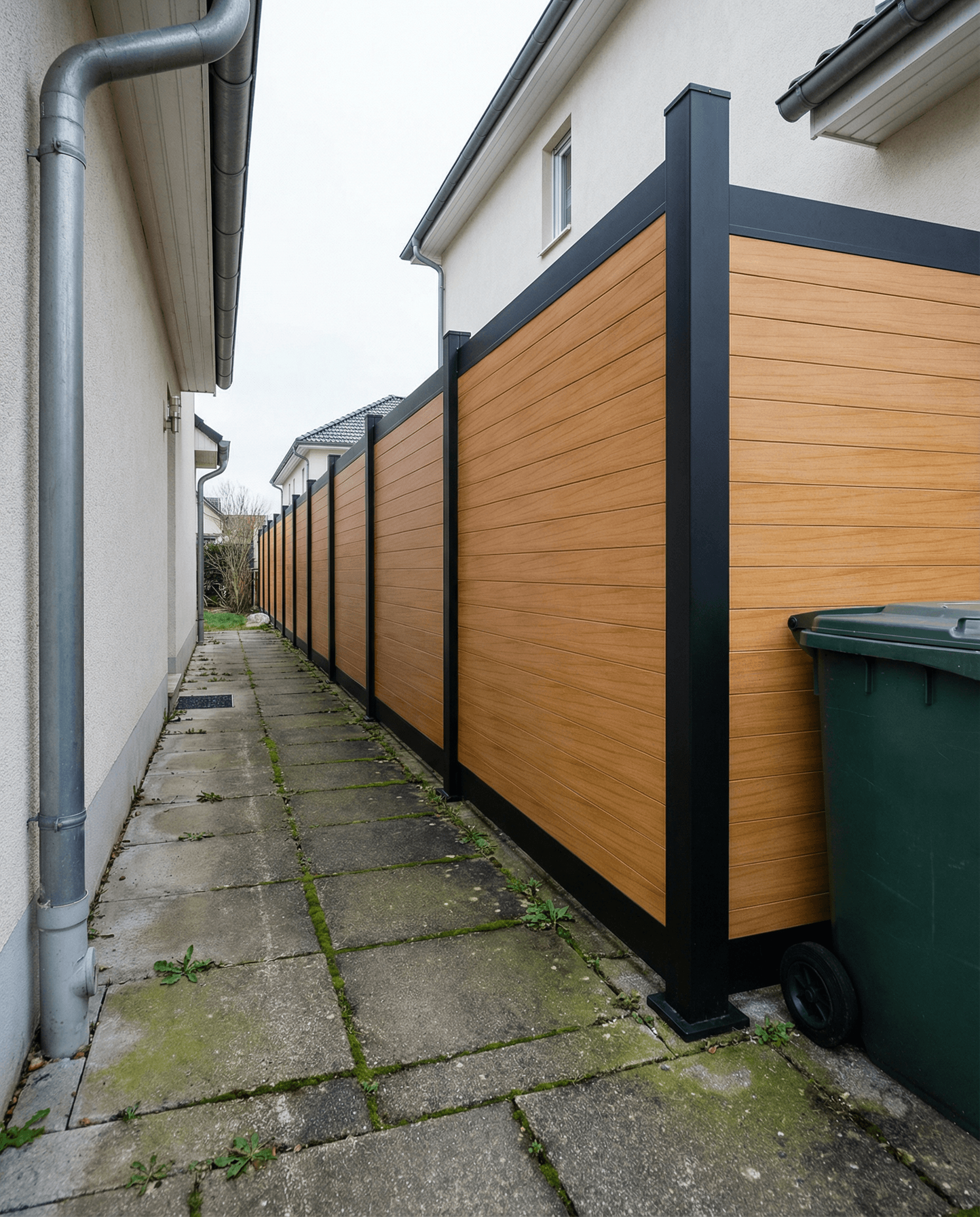
Even a skilled crew cannot make a poor product last. The system you choose sets the ceiling on quality, so match a careful contractor with a material engineered for Canadian weather. A pre engineered aluminum panel system installs faster and more consistently than building a fence board by board, which means fewer callbacks and a cleaner result on your property line.
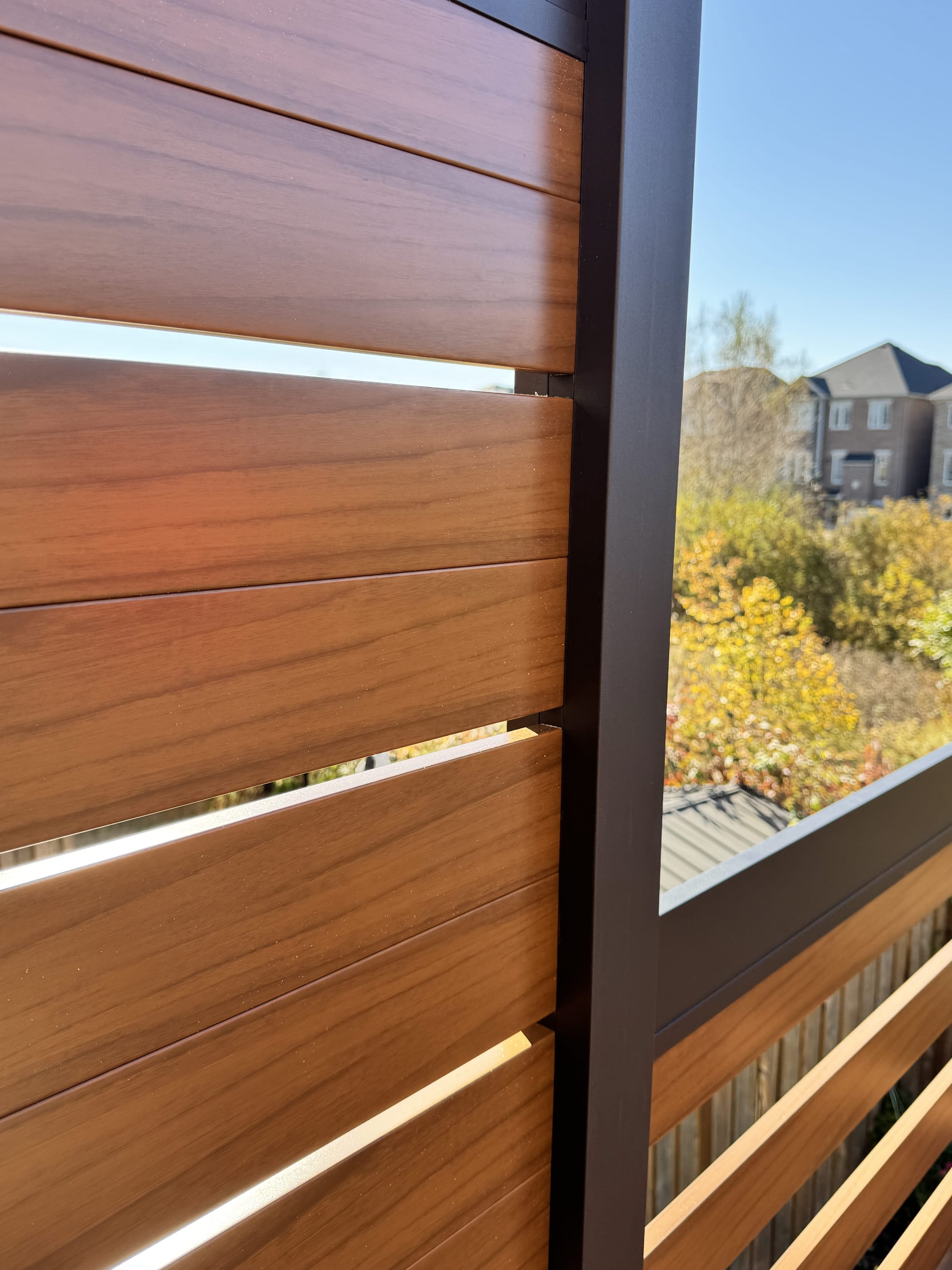
This is where the product behind the install earns its place. PrimeAlux aluminum systems use coated aluminum with wood-grain finishes applied through a 3 layer coating process, and the Privacy Plus line uses foam-core panel construction for added strength and insulation. The panels are tested to a 220 km/h wind load and carry an ASTM E84 Class A fire rating, with up to 70% recycled aluminum content. Whether you want full privacy with solid aluminum fence panels, airflow with a semi-privacy aluminum fence, or the insulated foam-core Privacy Plus panels, the system is built to hold its finish for decades. Many homeowners pair the fence with matching aluminum gates for a consistent look across the property. If you are weighing the switch from wood or vinyl, Homeowners around the GTA can also explore local supply for aluminum fence in Mississauga and aluminum fence in Toronto.
Frequently asked questions
Do I need a licence to check when hiring a fence contractor in Canada?
There is no single national fencing licence, so credentials vary by company and province. Instead of a licence number, verify liability insurance, workplace coverage such as WSIB in Ontario, a written contract, and local references. Those four checks tell you far more about reliability than any single certificate would on its own.
How many quotes should I get for a fence project?
Aim for three written quotes built on the same height, footage, and material so the comparison is fair. Three bids give you a sense of the going rate and expose any outlier that is unusually high or suspiciously low. Make sure each quote is itemized so you can see exactly what is and is not included.
What is a normal deposit for a fence contractor?
A partial deposit to cover materials is standard practice, often a portion of the total with the balance due on completion. Be cautious if a contractor asks for the full amount before any work begins. A written contract should always spell out the deposit, the payment schedule, and what each payment covers before you sign.
How long does it take to install a residential fence?
Most residential fence projects take one to three days once materials are on site, depending on length, terrain, and the number of gates. Pre engineered aluminum panel systems usually install faster than board by board wood fences. Permits, utility locates, and material lead times can add to the overall timeline before installation day.
Should the fence contractor handle permits and utility locates?
Yes. A professional fence installation includes confirming property lines, checking local bylaws for height limits, pulling any required permit, and calling for utility locates before digging. If a contractor never raises these steps, treat it as a warning sign, since skipped locates or setbacks can become your problem after the crew leaves.
Is aluminum fencing worth the higher upfront cost?
For most Canadian homeowners, yes. Aluminum costs more than wood or chain link at install but needs almost no maintenance and holds its finish for decades, while wood needs regular staining and earlier replacement. Over 15 years the lifetime cost often favours aluminum, especially once you count repairs, refinishing, and replacement on cheaper materials.
How do I check a fence company’s reputation?
Search the company name through the Better Business Bureau for complaint history, read recent reviews that mention fence work specifically, and ask for two or three local addresses you can drive by. Seeing a few of their fences that are several years old tells you how the work and finish actually hold up.
Choosing the right fence contractor with confidence
Hiring a fence contractor does not have to be a gamble. Ask each company the same questions, confirm insurance and coverage, get itemized written quotes, and pay attention to how specific they are about post depth and materials. Pair a careful installer with a fence system engineered for Canadian weather and you end up with a fence that looks right and performs for decades, not seasons. When you are ready to compare options, the team at PrimeAlux can help you spec the right aluminum system and connect you with quality installation. Reach out for a quote and bring informed questions to every contractor you meet.
