
Types of Fences in Canada: Materials, Styles, and What Actually Lasts
Choosing between the different types of fences is really a question of how your fence will hold up to Canadian weather and how much work you want to put into it after it goes up. The same five fencing materials show up on almost every quote: wood, vinyl, chain link, composite, and aluminum. They look similar on a brochure, but they age very differently once they face freeze-thaw cycles, snow load, and a few summers of UV.
This guide walks through each option, what it costs in upkeep over time, and how to match the right fence type to your property. The goal is a fence that still looks good in year ten, not just on installation day.
What Are the Main Types of Fences?
There are five fence types most Canadian homeowners choose between: wood, vinyl, chain link, composite, and aluminum. Each handles privacy, climate, and maintenance differently. The right pick depends on how much upkeep you accept, how cold your winters get, and whether you need full privacy or just a clean property line.
When people compare fencing options, they usually focus on the upfront price. The smarter comparison looks at the full picture: lifespan, how the fence looks after a few seasons, what maintenance it demands, and what it costs to keep or replace. Those four factors separate the kinds of fences far more than the sticker price does. A material that is cheap to install but needs staining every couple of years, or cracks in a cold snap, often costs more across ten years than a material that simply stands there and holds its finish.
Wood Fences: A Classic Look That Fades Fast
Wood fences cost less to install, but they start looking worn within one to two Canadian seasons. Cedar greys, cracks, and warps, while pressure-treated lumber twists and its posts rot below grade. A wood fence may stand for 8 to 12 years, but holding a clean look means staining it every two to three years.
Cedar is the better-looking wood and naturally resists insects, yet it still moves with moisture and loses its warm tone quickly once exposed to sun and rain. Pressure-treated pine is cheaper and lasts a bit longer structurally, but it warps more visibly and its chemicals leach over time. The bigger issue with both is below ground: wood posts sit in wet soil and rot from the base, which is why so many older wood fences lean. Most owners who chose wood end up staining it on repeat or living with an eyesore. If you are weighing the trade-offs, our breakdown of aluminum and wood compared covers the ten-year cost difference in detail.
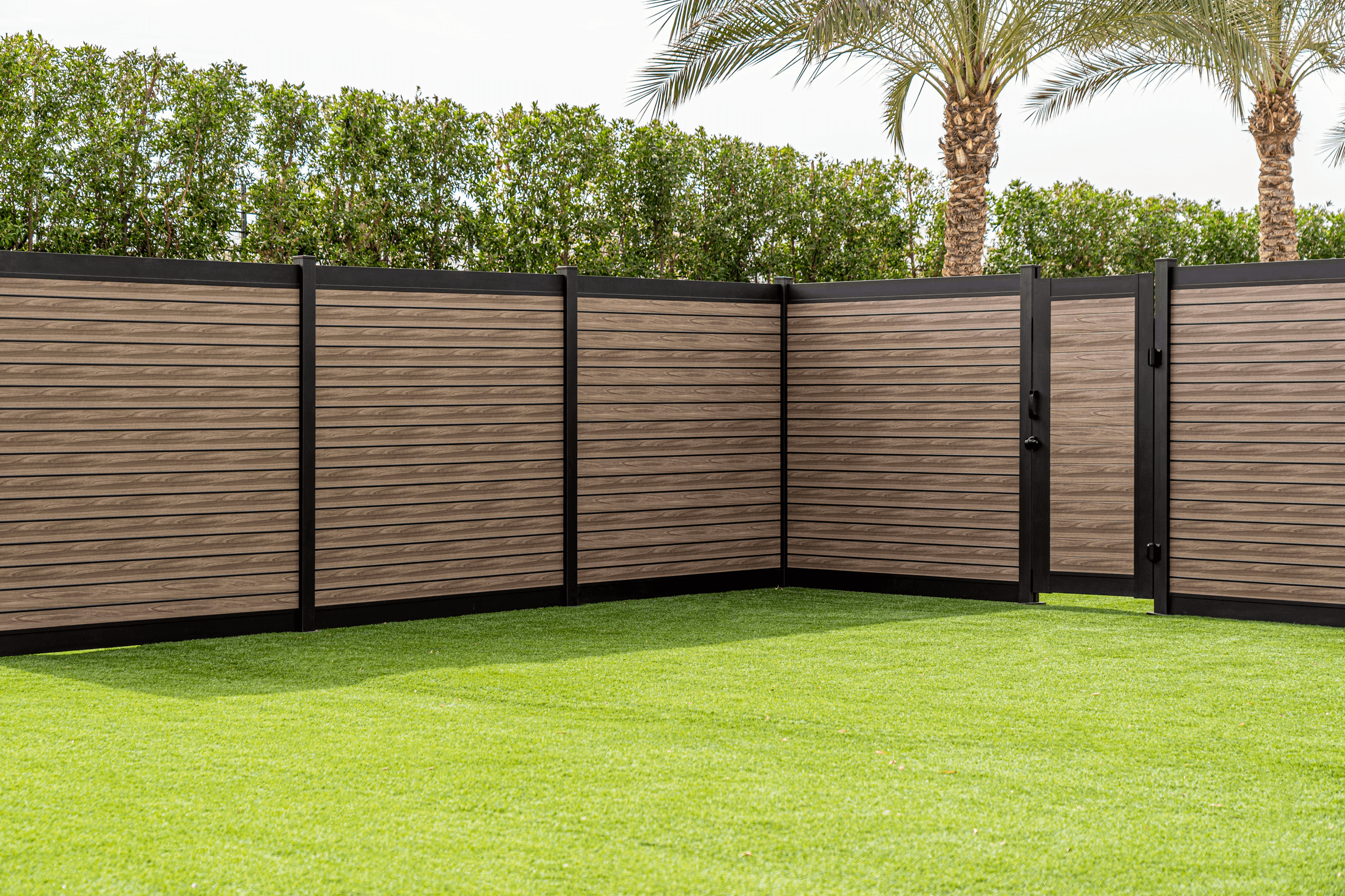
Vinyl (PVC) Fences: Low Maintenance With a Cold-Weather Catch
Vinyl fencing resists rot and never needs staining, which makes it popular. The catch shows up in Canadian winters: PVC can turn brittle below roughly -20C and crack on impact. Quality vinyl lasts about 10 years before fading and warping begin, and cheaper imported panels often fail sooner.
Vinyl also cannot be repaired once it cracks. A single damaged section means replacing the whole panel, since you cannot patch or refinish PVC the way you can sand and repaint wood. In summer heat it can warp and sag, and lower-grade vinyl yellows under UV. A large share of the vinyl sold in Canada is imported at the lowest possible spec, so the quality gap between products is wide. If vinyl is on your shortlist, compare it directly in our look at aluminum versus vinyl for cold climates.
Chain Link Fences: Functional, Affordable, Zero Privacy
Chain link is the budget choice. It marks a boundary and contains pets, but it gives no privacy and looks industrial from day one. Galvanized mesh resists rust for years, though the ties and top rails tend to sag over time and the look rarely suits a finished backyard.
For a back lane, a dog run, or a commercial yard where appearance does not matter, chain link does its job at the lowest cost. The moment privacy or curb appeal enters the picture, it stops being a real contender. People often start with chain link, then replace it within a few years once they want a finished yard, which means paying for two fences instead of one.
Composite Fences: A Wood Look Without the Staining
Composite fencing blends wood fibre and plastic to mimic timber without the staining. It resists rot better than wood, but composite can fade, hold moisture, and sag under its own weight on longer spans. It also sits at a premium price, often close to aluminum.
Composite is heavier than it looks, which puts more stress on posts and rails. Colour fade and surface chalking show up over time, and because the material is dense, it can trap moisture against framing. When you are already paying premium money, it is worth asking whether a lighter, longer-lasting material makes more sense. Our comparison of aluminum versus composite covers how the two hold up side by side in Canadian conditions.
Aluminum Fences: Built for Canadian Weather
Aluminum is the long-term answer for most Canadian properties. It will not rot, rust through, or warp, holds its finish for 25 years or more, and needs little beyond an occasional rinse. PrimeAlux panels are tested to a 220 km/h wind load and carry an ASTM E84 Class A fire rating, with a Flame Spread Index of 0 and a Smoke Developed Index of 50.
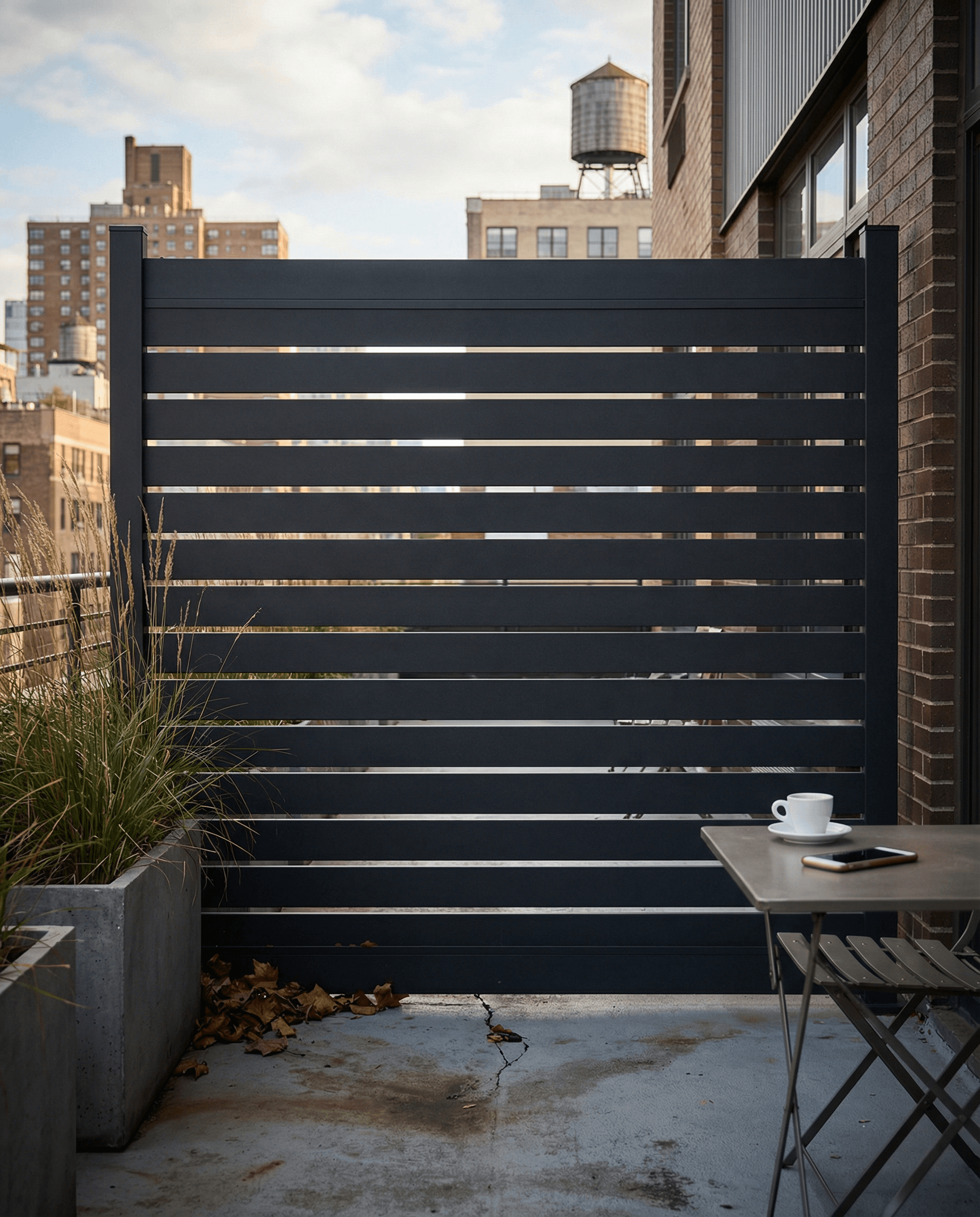
Aluminum also comes in more styles than people expect. Solid aluminum privacy fence panels block sightlines completely. Semi-privacy aluminum fence panels use spaced slats to let in light and airflow while still screening most of the view. The Privacy Plus line adds a foam core inside the panel for a heavier, more solid feel. Finishes use a three-layer coating in five wood-grain tones, so you get the warmth of timber without the upkeep.
The engineering details matter in a cold climate. Posts are set 3 ft underground to sit below frost-prone soil, panels come in sizes from 4 ft by 6 ft up to 8 ft by 8 ft with custom sizing available, and the aluminum contains up to 70 percent recycled content. Aluminum is a non-corrosive metal that is infinitely recyclable, a point the Government of Canada highlights in its aluminum facts. PrimeAlux manufactures its panels in Jordan and supports the Canadian market from a showroom in Mississauga, Ontario. Matching aluminum gates finish the system so the gate ages at the same rate as the fence.
Fence Materials Compared: Lifespan, Maintenance, and Cost
Side by side, the differences between fencing materials become clear. The table below summarizes how each fence type performs on the factors that decide long-term value in Canada.
| Fence Material | Typical Canadian Lifespan | Maintenance | Privacy | Main Weakness |
|---|---|---|---|---|
| Aluminum (PrimeAlux) | 25+ years | Rinse occasionally | Full or semi-privacy options | None material |
| Cedar wood | 8 to 12 years structural | Stain every 2 to 3 years | Full when new | Greys, cracks, and warps within 1 to 2 seasons |
| Pressure-treated wood | 7 to 10 years | Regular treatment | Full when new | Twists and posts rot below grade |
| Vinyl (PVC) | About 10 years | Periodic cleaning | Full when new | Brittle below -20C, cannot be repaired |
| Chain link | Long but industrial | Low | None | No privacy, sags and rusts over time |
| Composite | Around 15 years | Periodic cleaning | Full when new | Can fade, hold moisture, and sag on long spans |
How to Choose the Right Fence Type for Your Property
Start with four questions: how much privacy you need, how harsh your winters get, what your municipality allows, and how long you plan to stay. Privacy needs point you toward solid or semi-privacy panels. Cold winters rule out brittle materials. Local by-laws set your height limit. A longer time horizon rewards a material that will not need replacing.
Climate is the deciding factor in much of Canada. Repeated freeze-thaw cycles punish wood posts and crack cold vinyl, while aluminum stays stable. Before you order anything, check your local fence by-law, since cities like Toronto and Mississauga cap most residential fences near 2 metres and apply lower limits near corners. On budget, an installed aluminum fence runs roughly 80 to 120 dollars per linear foot in the Canadian residential market, and you can see what drives that figure in our guide to aluminum fence cost in Canada. Because the material asks for so little upkeep, the long-term maintenance column is where aluminum pulls ahead of every other option.
Frequently Asked Questions
What is the most low-maintenance type of fence?
Aluminum is the lowest-maintenance fence material. It does not rot, rust through, or need staining, and a coated aluminum panel holds its colour for decades. Most owners only rinse it with a hose once or twice a year to keep it looking new.
What type of fence lasts the longest in Canadian weather?
Aluminum lasts the longest in practical terms, typically 25 years or more without losing its finish. Wood may stand for 8 to 12 years but starts looking worn within a season or two, and vinyl usually shows cracking and fading after about 10 years.
Is vinyl or aluminum fencing better for cold winters?
Aluminum handles Canadian winters better. Vinyl can turn brittle below roughly -20C and crack on impact, and once a vinyl section fails it cannot be repaired. Aluminum stays dimensionally stable through repeated freeze-thaw cycles and does not become brittle in the cold.
How deep should fence posts go in Canada?
Fence posts should sit below the local frost line so they do not heave when the ground freezes and thaws. PrimeAlux aluminum posts are designed for a 3 ft underground burial depth, which suits most frost-prone Canadian soils when set in concrete.
How much does an aluminum fence cost in Canada?
As a general guide, an installed aluminum fence runs roughly 80 to 120 dollars per linear foot in the Canadian residential market. The final figure depends on panel height, style, terrain, and finish. Contact PrimeAlux for a quote on your exact configuration.
Do I need a permit to build a fence?
It depends on your municipality. Many Canadian cities cap residential fence height near 2 metres and apply lower limits near corners and sight lines. Check your local fence by-law before you order panels, since rules on height and placement vary from city to city.
Which type of fence gives the most privacy?
A solid panel fence gives the most privacy. PrimeAlux privacy and Privacy Plus panels block sightlines completely, while semi-privacy slat panels let in light and airflow while still screening most of the view. Chain link and open ornamental styles offer no privacy at all.
The Bottom Line on Fence Types
Across the common types of fences, the pattern is consistent: wood and vinyl win on upfront price but lose on how they look and last in Canadian weather, while aluminum costs more at install and then asks for almost nothing for the next two decades. If you want a fence that still looks finished in year ten, aluminum is the option that gets you there.
PrimeAlux builds privacy, semi-privacy, and Privacy Plus aluminum systems with matching gates, backed by real wind and fire test data. To see samples, get a quote for your property, or visit the Mississauga showroom, contact PrimeAlux and the team can help you match the right panel style to your yard.
