
Privacy Fence Gate: Matching Design, Hardware and Your Fence in Canada
Quick summary
A privacy fence gate is the access point built into a solid or near-solid fence run, so it has to block sightlines as well as the panels around it while still swinging or sliding smoothly for years. The gate carries more stress than any panel because it moves, so frame material, hinges, and the latch decide whether it sags, rattles, or holds true. Aluminum gate frames stay light and rigid, resist Canadian freeze-thaw, and never rot at the hinge side the way wood does. For pool enclosures, Canadian guidance calls for a self-closing, self-latching gate, which aluminum hardware handles cleanly. Installed privacy fencing in Canada generally runs about $80 to $120 per linear foot, and a matching gate is priced separately based on width and hardware.
What Is a Privacy Fence Gate?
A privacy fence gate is the moving section of a privacy fence that lets you walk or drive through without breaking the screen the rest of the fence provides. It uses the same solid or tightly spaced infill as the panels, so when it is closed the gate disappears into the fence line instead of leaving an obvious gap. That single idea, full coverage plus reliable movement, is what separates a real privacy gate from a basic garden gate that anyone can see through.
The gate is also the hardest-working part of the whole fence. Panels just stand still. A gate opens and closes hundreds of times a season, it takes wind load on a large solid surface, and it hangs off two or three hinge points instead of being supported along its full length. Get the gate right and the fence feels finished. Get it wrong and you end up with a section that drags on the ground, pops its latch in the wind, or twists out of square within a couple of winters. PrimeAlux builds its aluminum gate systems to match each fence line, so the access point performs like the rest of the run rather than becoming the weak link.
Privacy Fence Gate Materials Compared
The best privacy fence gate material for Canadian yards is aluminum, because it stays rigid and light at the same time, shrugs off road salt and rain, and does not rot where the hinges bolt on. Wood and vinyl gates can look fine on day one, but the gate is exactly where their weaknesses show up first. A heavy wood gate pulls on its hinge post and starts to sag, and a vinyl gate frame can flex and crack in cold weather. The table below compares the common options on the things that actually matter once a gate is in daily use.
| Gate frame material | Typical lifespan in Canada | Sag and warp risk | Maintenance |
|---|---|---|---|
| Aluminum (PrimeAlux) | 25+ years | Low. Light and rigid, holds square | None beyond occasional cleaning |
| Cedar or pressure-treated wood | 7 to 12 years structural | High. Heavy, absorbs water, sags at hinges | Stain or seal every 2 to 3 years |
| Vinyl (PVC) | Around 10 years before issues | Medium. Frame flexes, gets brittle in cold | Periodic cleaning, cannot be repaired once cracked |
| Steel or wrought iron | Long if coating holds | Low strength-wise, but very heavy on hinges | Repaint to fight rust, watch for corrosion |
Wood is the material most homeowners regret on a gate. A solid privacy gate is a large, heavy slab, and wood adds weight every time it rains because the boards soak up moisture. That weight works against the hinge post all season until the latch edge drops and the gate scrapes the ground. Aluminum keeps the same full-privacy face without the water weight, which is why it stays square. If you are weighing materials for the whole project, our guide to aluminum fence styles walks through how each look carries over to the matching gate.
Gate Hardware That Keeps a Privacy Gate Working
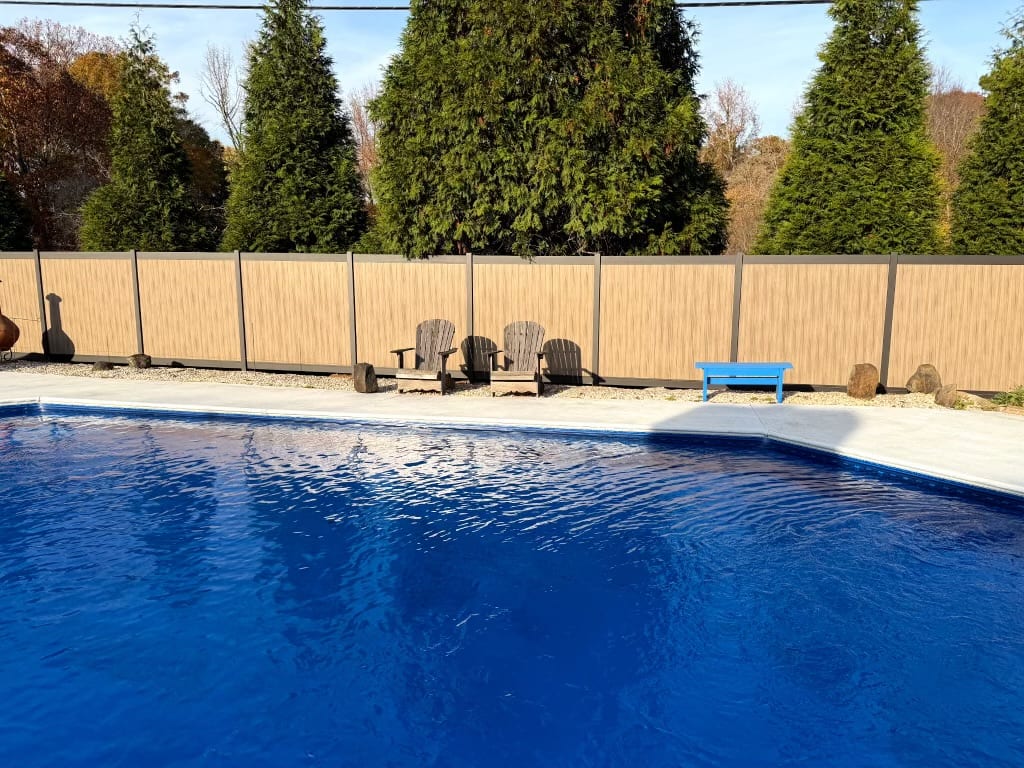
Hardware is what makes or breaks a privacy fence gate, because the frame can be perfect and the gate will still fail if the hinges, latch, and closer are undersized. A privacy gate is heavier and catches more wind than an open-picket gate, so it needs hinges rated for the actual weight and a latch that seats reliably even when the wind is pushing the gate. Skimping here is the most common reason a good fence ends up with a gate that no longer closes on its own.
Three pieces of hardware carry the load. Hinges have to be strong enough for a solid panel and adjustable so you can re-true the gate later without removing it. The latch should self-seat and, on many gates, lock. A self-closing hinge or a separate gate closer pulls the gate shut every time so it is never left standing open. For wider openings or tight side yards where a swing gate would hit a wall, a sliding setup changes the equation, and our breakdown of sliding gate hardware covers the tracks, rollers, and guides involved. For standard swing gates, the aluminum fence gate guide explains how the hinge and latch are matched to gate size.
Pro tip
Spec the hinges and latch for the gate, not the fence. Installers size hardware to the panel weight and width, then add a self-closing hinge on anything near a pool, a driveway, or a play area. A latch that sits 1.5 metres up is also harder for small children to reach, which matters for safety as much as security.
Matching the Gate to Your Fence System
A privacy fence gate should read as part of the fence, not a bolt-on, so the infill style, slat direction, height, and finish all need to carry across from the panels to the gate. When the gate matches, your eye slides right past it and the yard looks fully enclosed. When it does not match, the gate becomes the first thing visitors notice, and the privacy effect weakens because the break in pattern signals exactly where the opening is.
Matching means a few specific things. The slat orientation should continue, so a horizontal-slat fence gets a horizontal-slat gate. The height should line up at the top rail so the gate does not sit short and leave a sightline. The colour and wood-grain finish should be the same batch, since PrimeAlux applies its wood-grain looks through a three-layer coating process across panels and gates alike. If you run full privacy aluminum fence on the property line and step down to semi-privacy aluminum fence elsewhere, plan which style the gate should follow before ordering. For the heaviest screening, the foam-core Privacy Plus line gives the gate the same solid face as the panels.
Pool Gates and Canadian Safety Requirements
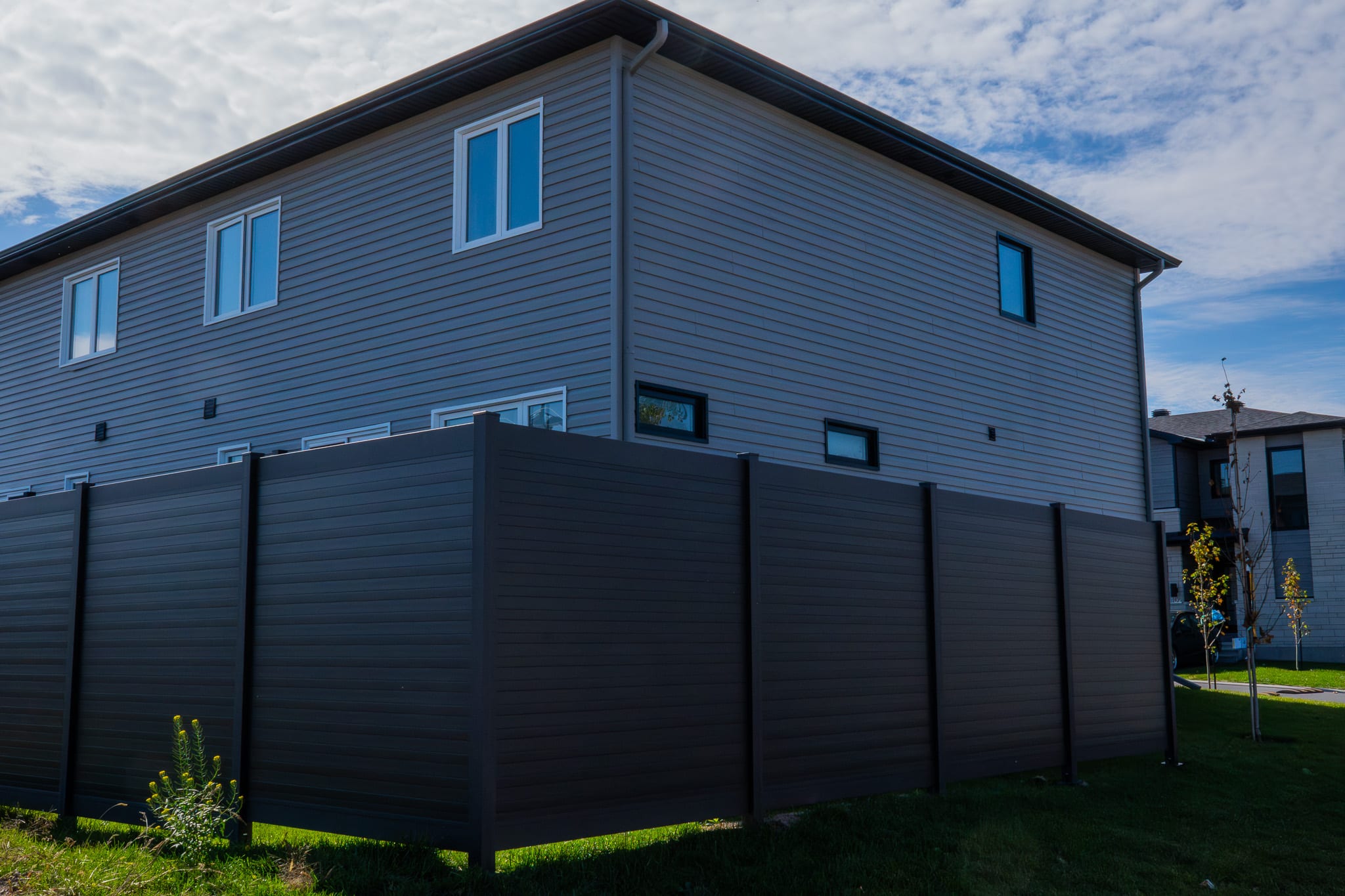
A pool privacy fence gate has to be self-closing and self-latching, because that is the feature that actually keeps a gate from being left open around water. Health Canada recommends a fence at least 1.2 metres high all the way around a pool, with a gate that closes and latches on its own (Health Canada swimming safety guidance). Drowning is a leading cause of injury death for young children, and organizations such as the Lifesaving Society stress controlled access to the pool area as a core layer of protection.
Beyond the federal guidance, the exact rules are local. Many municipalities set their own pool enclosure bylaws covering height, gap sizes, and latch placement, and they often differ from the rules for a regular property-line fence. The City of Toronto, for example, publishes separate fence and pool enclosure requirements, and other Ontario cities do the same. Always confirm your municipality’s pool enclosure rules before you order, then build the gate to meet them. An aluminum gate suits pool duty well because the frame does not rot at the wet hinge side, and the hardware is built for repeated self-closing cycles. Our aluminum pool fence guide goes deeper on enclosure layout.
Sizing, Posts and Installation in Canadian Conditions
The gate posts, not the gate itself, are where most installs succeed or fail, because everything the gate does is transferred into the hinge post and the soil holding it. A privacy gate is heavy and acts like a sail in the wind, so the hinge post has to be set deep and solid. PrimeAlux specifies a 3 ft underground burial depth for posts, which puts the footing below the frost line across most of populated Canada and keeps the post from heaving when the ground freezes and thaws. A post that moves with frost is the quiet cause of a gate that latched fine in October and binds by March. Our guide on how deep a fence post should be covers the frost-line reasoning in detail.
Sizing is the other planning step. Walk gates are usually built to a comfortable single-leaf width, while wider openings for equipment or a side yard often use a double gate so each leaf stays light and manageable. PrimeAlux panels run from 4 ft by 6 ft up to 8 ft by 8 ft with custom sizes available, so the gate can be built to match your opening and your fence height rather than forcing the opening to fit a stock size. Aluminum also tested to a 220 km/h wind load and carries an ASTM E84 Class A fire rating (Flame Spread Index 0, Smoke Developed Index 50), which matters on a large solid gate that takes the full push of a gust. If you want a driveway-width opening, see our overview of driveway gates in Canada, and for lock-and-access features look at options for a home security gate.
What a Privacy Fence Gate Costs in Canada
A privacy fence gate is priced separately from the fence, because it includes the moving leaf plus hardware that a plain panel does not need. As a planning anchor, installed privacy fencing in Canada generally runs about $80 to $120 per linear foot for the homeowner, and the gate adds cost on top of that based on its width, height, and the hardware you choose. A simple single walk gate with a basic latch sits at the low end. A wide or double gate, a self-closing setup, or a lock pushes it higher. Exact gate pricing depends on your configuration, so contact PrimeAlux for a quote rather than budgeting from a generic number.
It helps to look at cost over the life of the gate, not just the day you buy it. A wood gate can be cheaper up front, but staining it on a schedule and replacing it when it sags and rots adds up, and most owners skip the staining and end up with an eyesore faster than they expected. Aluminum costs more at the start and then asks for almost nothing, since there is no rust to chase and no boards to replace. Because the finish is coated through and the frame does not corrode, an aluminum gate needs only occasional cleaning, which our aluminum fence maintenance guide explains. Aluminum is also highly recyclable, with the Aluminum Association noting that a large share of all aluminum ever produced is still in use, and PrimeAlux panels use up to 70% recycled content.
Frequently Asked Questions
What is a privacy fence gate?
It is the gate section of a privacy fence that uses the same solid or tightly spaced infill as the panels. When closed, it keeps the screen unbroken so people cannot see through the opening, while still swinging or sliding to let you in and out. The goal is full coverage plus reliable movement.
What is the best material for a privacy fence gate in Canada?
Aluminum, in most cases. It is light yet rigid, so it holds square without sagging, and it does not rot at the hinge side or rust in road salt and rain. Wood gates get heavy with moisture and sag, and vinyl frames can flex and grow brittle in the cold, which is why aluminum holds up better across Canadian seasons.
Does a pool gate have to be self-closing and self-latching?
For pool enclosures, yes. Health Canada recommends a self-closing, self-latching gate on a pool fence at least 1.2 metres high, and many municipalities require it in their pool enclosure bylaws. Confirm your local rules, since height, latch placement, and gap limits are set at the city level and can be stricter than the general guidance.
How deep should a privacy gate post be set?
PrimeAlux specifies a 3 ft underground burial depth for posts, which places the footing below the frost line across most of populated Canada. A gate puts more stress on its hinge post than any panel does, so setting that post deep and solid is what keeps the gate from binding after the ground freezes and thaws.
Why does my wood gate sag when the fence is fine?
Because the gate moves and the panels do not. A solid wood gate is heavy, and it gets heavier when it rains as the boards absorb water. That weight pulls on the hinge post until the latch edge drops and the gate scrapes the ground. An aluminum gate keeps the same full-privacy face without the water weight, so it stays square.
Can a privacy fence gate be automated?
Wider openings can be. A driveway-width swing or sliding gate can be set up for automation with the right hardware, while standard walk gates usually use a self-closing hinge instead. If you are planning a motorized opening, choose the gate and hardware with automation in mind from the start so the frame and posts are sized for it.
How much does a privacy fence gate cost in Canada?
The fence itself generally runs about $80 to $120 per linear foot installed, and the gate is priced on top of that based on width, height, and hardware. A basic single walk gate is the least expensive option, while double gates, self-closing setups, and locks add cost. Contact PrimeAlux for a quote on your specific opening.
Planning Your Privacy Fence Gate
The gate is the part of a privacy fence you touch every day, so it is worth getting right rather than treating it as an afterthought. Match the infill, height, and finish to your panels, size the posts and hardware for the real weight and wind, and add self-closing hardware anywhere safety matters. Built that way, an aluminum privacy fence gate stays square, latches every time, and keeps your yard fully screened for decades instead of becoming the section that always needs attention. To plan a gate that matches your fence and meets your local requirements, explore the PrimeAlux aluminum gate options or contact PrimeAlux for a quote built around your opening.
